
Air Conditioner Not Cooling? It Might Not Need More Gas
If your air conditioner is running but not cooling properly, it's easy to assume it needs more gas. However, refrigerant leaks are only one possible cause of poor cooling, and in many cases, the problem is something considerably simpler.
Blocked filters, dirty indoor coils, faulty fans, incorrect controller settings and airflow restrictions can all prevent an air conditioner from cooling effectively.
At Artarmon Air Conditioning, we regularly attend service calls across Sydney where customers suspect their system is low on refrigerant. Sometimes they're right, but quite often we discover a completely different issue.
Before spending money on refrigerant leak detection or repairs, it's important to establish what's actually causing the problem.
Does Air Conditioning Gas Run Out?
No. Under normal operating conditions, the refrigerant in an air-conditioning system does not get used up or require periodic replacement.
Unlike fuel in a car, refrigerant circulates through a sealed system, transferring heat between the indoor and outdoor units.
Provided the refrigeration circuit remains sealed and in good condition, the refrigerant should last for the life of the system.
If an air conditioner has lost refrigerant, there's generally a leak somewhere in the system.
Leaks can develop from:
Poorly made flare connections during installation.
Corrosion of refrigerant pipework or heat exchangers.
Vibration causing fatigue or damage to pipework.
Mechanical damage to refrigeration components.
Deterioration of components over time.
When a system is genuinely low on refrigerant, the correct approach is to investigate the leak, repair it and restore the appropriate refrigerant charge.
Simply adding more gas without investigating why it was lost is not a proper repair.
7 Common Reasons Your Air Conditioner Isn't Cooling
1. Blocked Air Filters
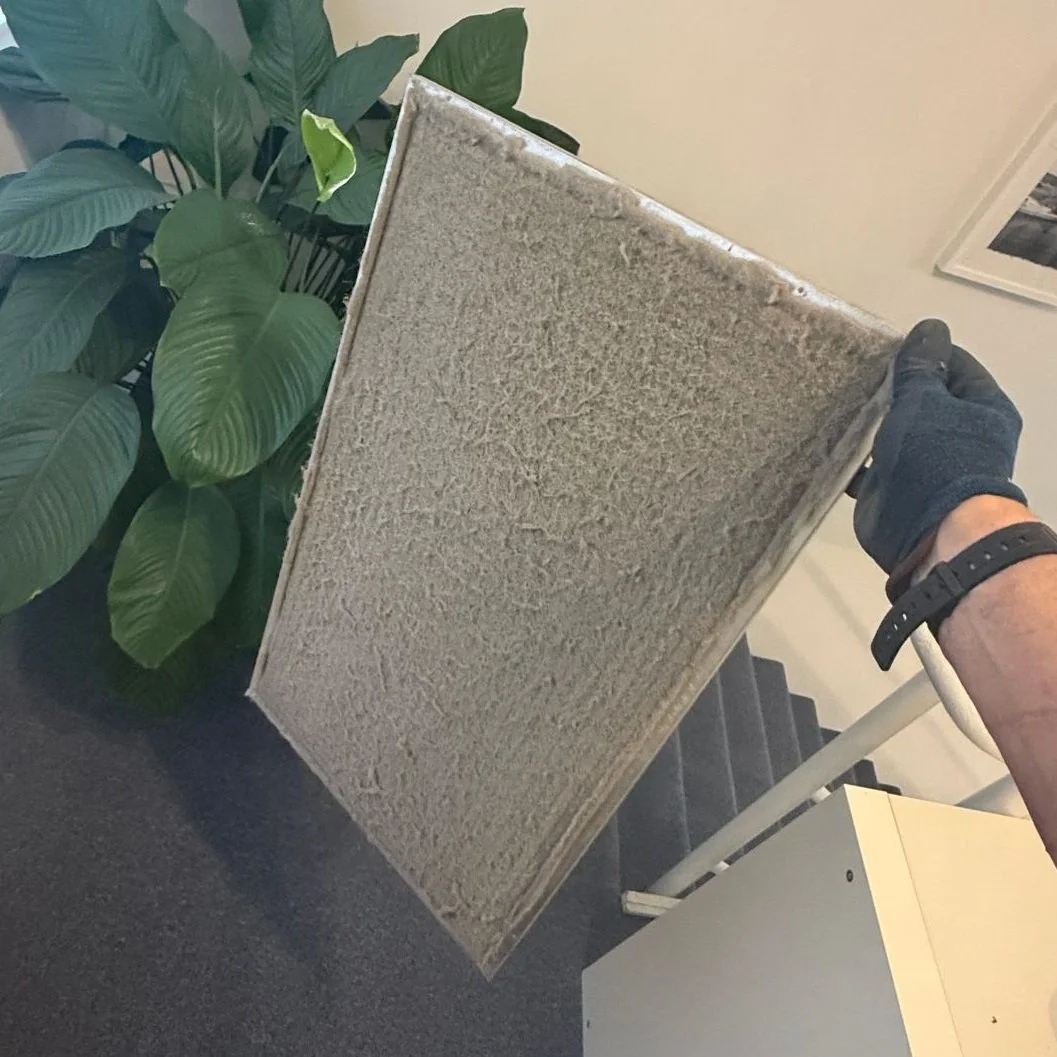
A blocked filter for a ducted AC. The filter media is supposed to be white.
This is one of the most common problems we encounter, and fortunately, it's also one of the easiest to prevent.
Air conditioners rely on a continuous supply of air passing through the indoor heat exchanger, known as the evaporator coil.
As filters accumulate dust, the volume of air passing through the unit decreases.
This can result in:
Poor cooling performance.
Reduced airflow from the indoor unit.
Increased operating costs.
Ice forming on the indoor coil.
Additional strain on refrigeration components.
In severe cases, prolonged airflow restrictions can contribute to liquid refrigerant returning to the compressor, potentially causing serious damage.
Our advice: Check and clean your air filters regularly. This is something most homeowners can do themselves by following the manufacturer's instructions.
If the filters are clean but airflow is still poor, the problem may be further inside the unit.
2. A Dirty or Blocked Indoor Coil
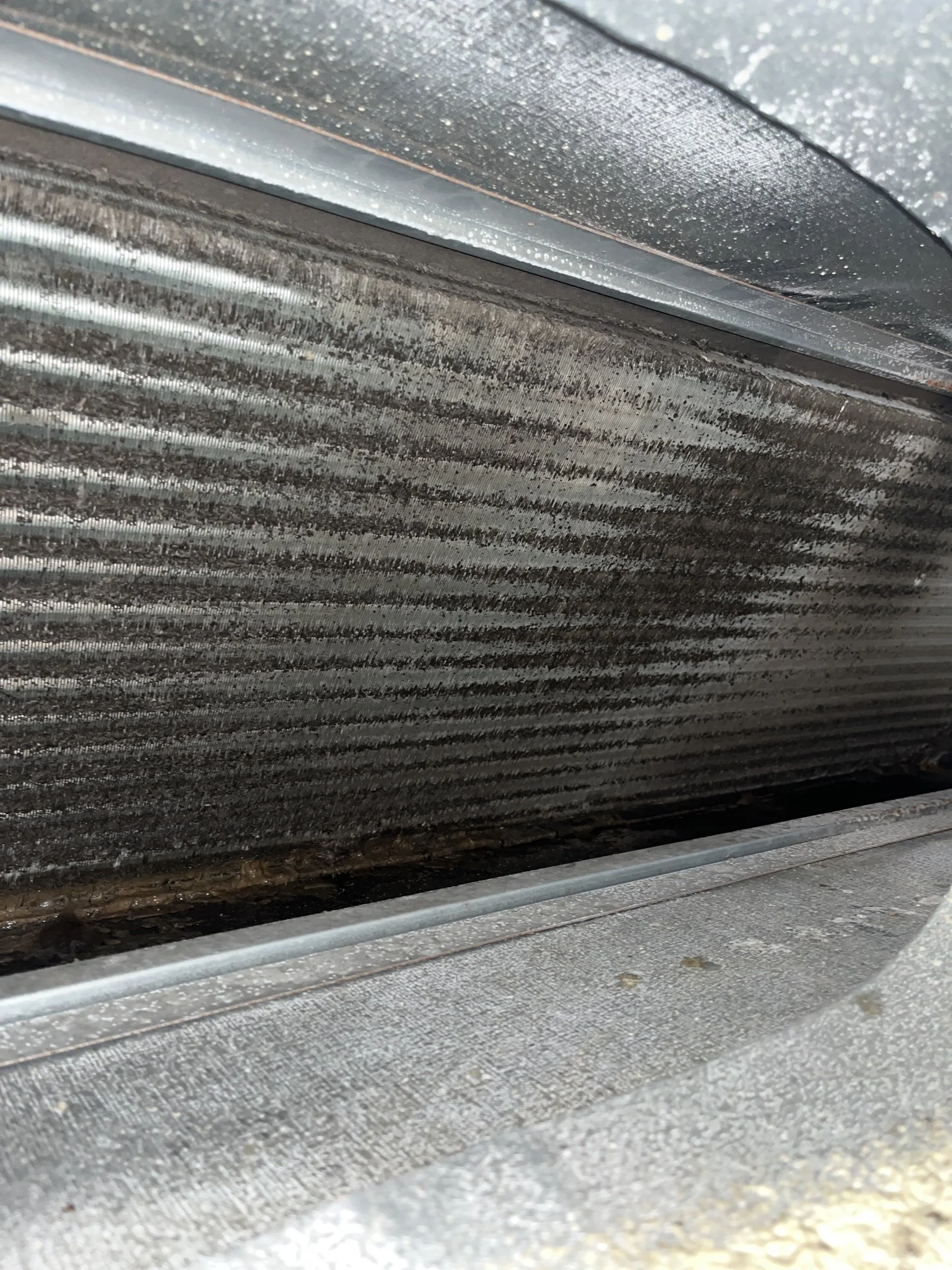
This unit didn’t have a filter properly fitted (the result of a poor installation) the coil eventually built up with what you see.
Cleaning the filters doesn't necessarily mean the air conditioner is clean.
When filters become heavily restricted, or dust and other contaminants bypass them, debris can accumulate directly on the indoor coil and fan barrel.
Over time, this buildup can significantly restrict airflow.
We frequently discover systems with clean-looking filters but indoor coils covered in dirt, dust, mould or other contaminants.
When contamination becomes severe, a routine filter clean is no longer sufficient.
The indoor unit may need to be dismantled so the coil, fan barrel, drain tray and other components can be properly cleaned.
A real example from one of our Sydney service calls demonstrates just how much difference this can make.
Real Service Call: The Air Conditioner That Didn't Need Gas
We recently attended a dog grooming salon where the customer believed their air conditioner needed more refrigerant.
The system was running, but it was no longer cooling the grooming room effectively.
The customer had already cleaned the air filters, but this hadn't resolved the problem.
Given the symptoms, they suspected the system was low on gas.
When we inspected the indoor unit, however, the cause became apparent.
The air conditioner was absolutely packed with dog hair.
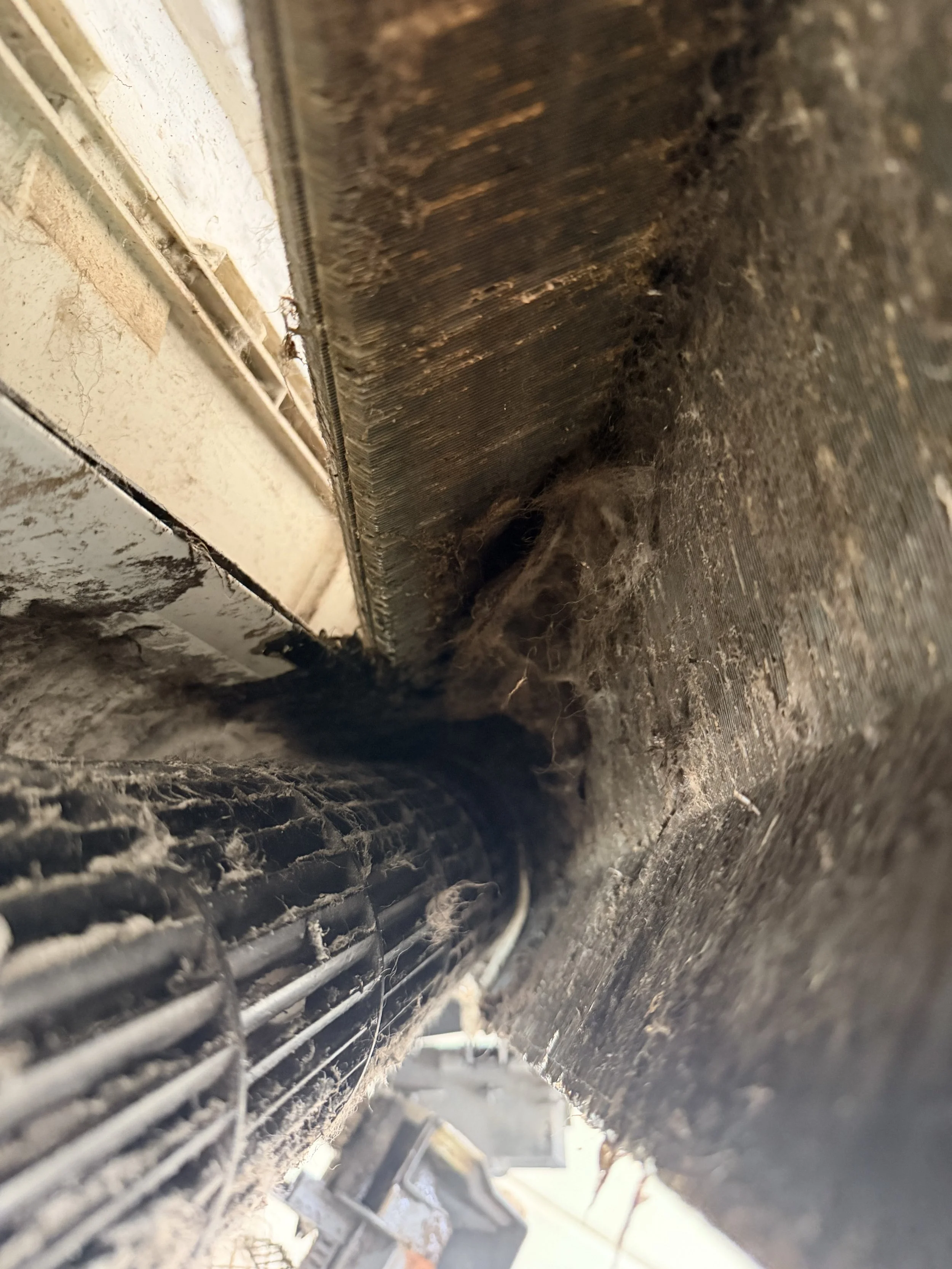
Despite the filters being cleaned, large amounts of hair had accumulated inside the unit, severely restricting airflow through the indoor coil.
The refrigeration system couldn't perform effectively because there simply wasn't enough air moving through it.
What We Did
Rather than immediately connecting refrigeration gauges or looking for a gas leak, we addressed the obvious airflow restriction first.
We dismantled the indoor unit as required, removed the accumulated dog hair and carried out a thorough deep clean.
Once the coil, fan and other affected components were cleaned, we reassembled the system and performed operational checks.
The Result
The improvement was immediate.
Airflow and cooling performance were restored, and our subsequent checks confirmed the system was operating correctly.
No refrigerant was required. No refrigeration leak repair was necessary.
The customer had assumed the problem was low gas, but the actual cause was a severely restricted indoor unit.
This is why proper fault diagnosis matters. Had we simply accepted the original assumption, the customer could have paid for unnecessary work without addressing the underlying problem.
Photo placement: Before cleaning — indoor coil and fan heavily contaminated with dog hair.
Photo placement: After cleaning — restored coil and fan condition.
3. Incorrect Controller Settings
Before booking a service call, check that your air conditioner is actually set to cooling mode.
It sounds obvious, but we regularly encounter situations where a system has been accidentally left in heating, fan-only or another operating mode.
For cooling, look for the snowflake symbol on the controller.
The temperature displayed on the remote is also worth understanding.
The temperature you select is your target room temperature, not the temperature of the air coming out of the unit.
For example, setting your controller to 23°C tells the system to work towards maintaining approximately 23°C in the conditioned space, subject to the system's temperature sensing and control arrangement.
It does not mean the air coming out of the indoor unit will be 23°C.
We generally recommend starting at 23°C for comfort and adjusting the setting according to your preference.
Turning the controller down to 16°C won't necessarily make the air coming out any colder or cool the room faster.
4. Faulty Fan Motors or Capacitors
Both the indoor and outdoor units rely on fans to move air across their respective heat exchangers.
If a fan stops operating or cannot reach its required speed, cooling performance can deteriorate significantly.
On systems fitted with capacitor-operated motors, a failed or deteriorating capacitor can prevent the fan from starting or operating correctly.
Other systems use electronically controlled motors that can develop different electrical or mechanical faults.
Depending on the equipment, symptoms can include unusual noises, poor airflow, intermittent operation or the system shutting down on a fault.
These problems require electrical testing and professional diagnosis.
Regular maintenance can sometimes identify deteriorating components before they cause a breakdown.
5. Outdoor Unit Airflow Restrictions or Pest Damage
Outdoor units are frequently exposed to leaves, vegetation, dust, insects and other environmental contaminants.
If airflow through the outdoor heat exchanger becomes restricted, the system can struggle to reject heat during cooling operation.
We also regularly discover pest activity inside outdoor units, including rodent nests and insects around electrical components.
Cockroaches and rodents can cause significant damage to electrical wiring and circuit boards.
Openings that weren't adequately sealed during installation can provide convenient access points for pests.
A proper inspection should include checking the condition of the outdoor unit, its airflow path and signs of pest activity.
Never remove electrical covers or reach inside an outdoor unit while attempting to investigate these problems yourself.
6. Poorly Installed or Damaged Ductwork
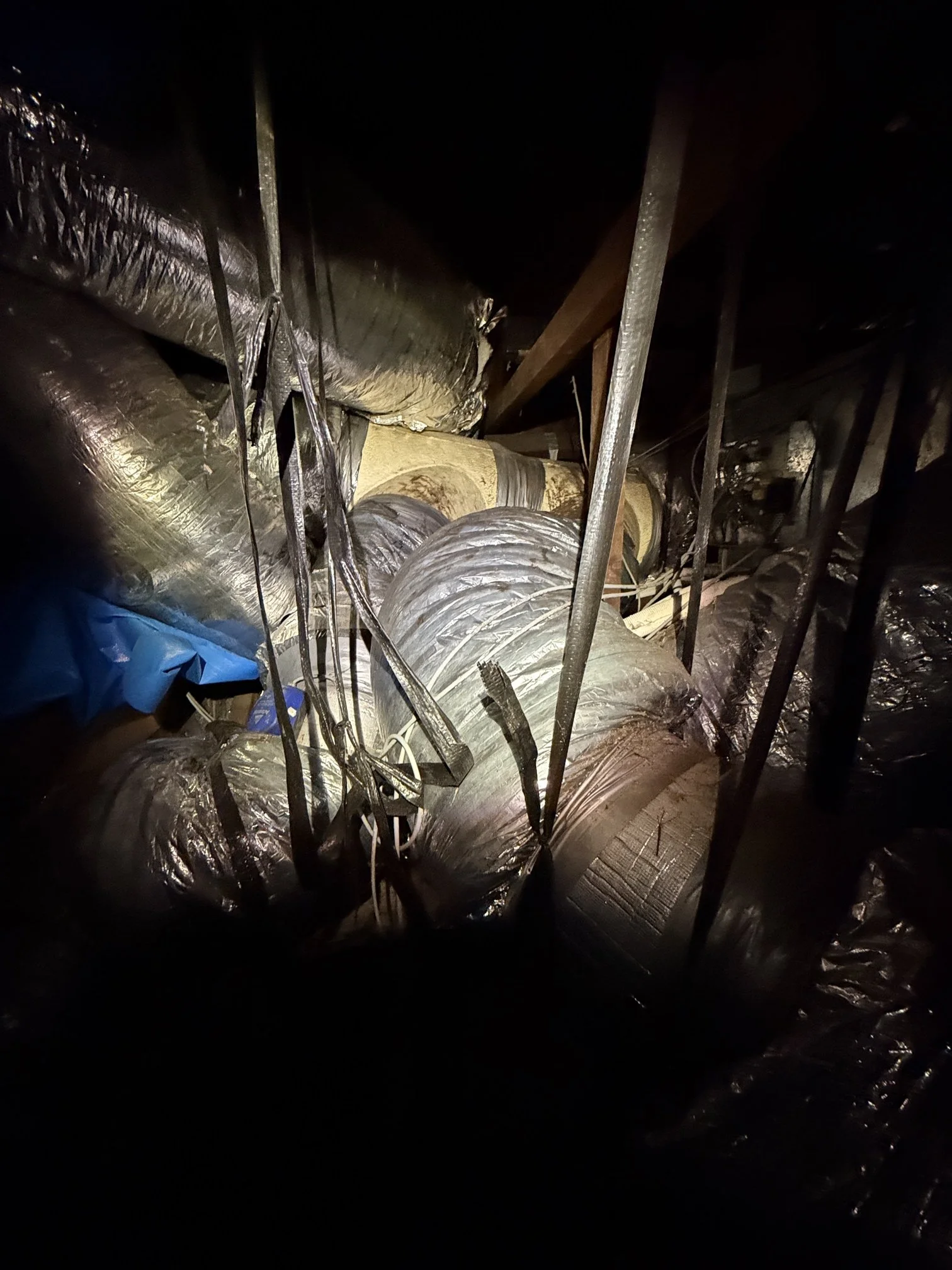
If you have a ducted air-conditioning system, the fault may have nothing to do with the refrigeration equipment.
Poor ductwork design and installation are problems we regularly encounter during inspections.
Common defects include:
Crushed or excessively bent flexible ductwork.
Poorly sealed duct connections.
Undersized ducts restricting airflow.
Disconnected or leaking supply-air ducts.
Faulty zone dampers and controls.
In some cases, the air-conditioning unit itself is functioning correctly, but conditioned air isn't reaching the rooms as intended.
These problems can be difficult for homeowners to identify because most of the ductwork is concealed within the roof space.
7. Refrigerant Leaks
Refrigerant leaks are a genuine cause of poor cooling and shouldn't be overlooked.
Insufficient refrigerant can prevent a system from achieving its intended performance and may cause additional operating problems.
Possible symptoms include reduced cooling capacity, ice formation, abnormal operating behaviour or manufacturer fault codes.
However, these symptoms can also be caused by other faults.
Ice on an indoor coil, for example, does not automatically mean the system is low on refrigerant. A severe airflow restriction can produce a similar symptom.
This is why we assess the system's overall operation before drawing conclusions about the refrigerant charge.
Can You Just Top Up an Air Conditioner With Gas?
Not if the system has a known refrigerant leak that hasn't been repaired.
In Australia, refrigerant handling is regulated, and licensed technicians must comply with applicable requirements.
The Australian and New Zealand Refrigerant Handling Code of Practice states that a system known to be leaking must not be topped up until the leaks have been repaired.
These requirements are intended to prevent unnecessary refrigerant emissions and ensure appropriate repair practices.
At Artarmon Air Conditioning, we don't treat refrigerant as a consumable that needs periodic topping up.
Where refrigerant loss is suspected, we investigate the cause and recommend an appropriate repair.
For further information, refer to the Australian Refrigeration Council's Refrigerant Handling Code of Practice.
What Should You Check Before Calling an Air Conditioning Technician?
If your air conditioner isn't cooling properly, there are a few straightforward checks you can make before arranging a service call.
Check the operating mode. Confirm the controller is set to cooling, usually indicated by a snowflake symbol.
Check the temperature setting. Make sure the selected temperature is below the current room temperature.
Inspect the air filters. If they're dirty, clean them in accordance with the manufacturer's instructions and allow them to dry before refitting.
Check for airflow obstructions. Ensure furniture, curtains and other objects aren't obstructing the indoor air intake or outlets.
Inspect the area around the outdoor unit. Make sure vegetation, stored items and accumulated debris aren't restricting airflow.
Look for fault indications. Flashing lights or error codes can help identify whether the system has detected a malfunction.
If the problem persists after these checks, it's worth arranging a professional inspection.
If the system is icing up, producing unusual electrical smells, making abnormal mechanical noises or repeatedly tripping a circuit breaker, switch it off and seek professional assistance.
Do not attempt to open electrical compartments, test capacitors or access the refrigeration circuit yourself.
How Do We Diagnose an Air Conditioner That Isn't Cooling?
When we attend a cooling fault, our approach is to establish how the system is operating before recommending repairs.
Depending on the symptoms and equipment, our inspection may include:
Checking controller settings and any stored fault codes.
Inspecting air filters, the indoor coil and fan assembly.
Assessing indoor and outdoor airflow.
Checking the condition and operation of the outdoor unit.
Inspecting for visible installation defects and pest damage.
Measuring relevant operating temperatures and electrical parameters.
Assessing compressor and fan operation.
Investigating the refrigeration circuit where the findings indicate a possible refrigerant fault.
Not every fault requires every test.
For example, if an indoor coil is visibly blocked and airflow is severely restricted, addressing that problem may be the appropriate first step before undertaking further refrigeration diagnostics.
Once the fault is rectified, we test the system to confirm whether normal operation has been restored.
Our objective is to identify the underlying problem rather than simply treat the symptoms.
Frequently Asked Questions
Why is my air conditioner running but not blowing cold air?
Possible causes include blocked filters, a dirty indoor coil, incorrect controller settings, fan faults, outdoor unit problems or insufficient refrigerant. A professional inspection may be necessary to identify the actual fault.
How do I know if my air conditioner needs more gas?
Poor cooling, ice formation and certain fault codes can be associated with low refrigerant, but none reliably confirms refrigerant loss on its own. A licensed technician needs to assess the system and investigate any suspected leak.
Can dirty filters stop an air conditioner from cooling?
Yes. Severely blocked filters restrict airflow through the indoor heat exchanger, reducing cooling performance. In some circumstances, restricted airflow can also cause the coil to ice up.
Why isn't my air conditioner cooling after I cleaned the filters?
Dust and debris may already have accumulated on the indoor coil or fan barrel. Alternatively, the fault could involve the fan, controls, outdoor unit or refrigeration system. Cleaning the filters alone won't resolve these problems.
How often should I have my air conditioner serviced?
It depends on the system's operating hours and environment. For many residential systems, annual professional maintenance is a reasonable starting point. Systems operating heavily throughout the year or exposed to significant pest activity and environmental contamination may benefit from six-monthly inspections.
Always follow the manufacturer's maintenance requirements.
Is it worth repairing an air conditioner that isn't cooling?
Often, yes. A blocked coil, faulty capacitor or other relatively minor component fault may be economical to rectify.
However, the age of the system, availability of replacement parts, extent of the damage and likelihood of further breakdowns should all be considered before proceeding with expensive repairs.
Getting Your Air Conditioner Cooling Again
An air conditioner that isn't cooling doesn't automatically need more refrigerant, and replacing the entire system shouldn't be the first assumption either.
In our experience, some of the most frustrating cooling problems are caused by relatively straightforward faults that can be identified through a proper inspection.
The dog grooming salon is a good example. The customer suspected a refrigerant problem, but the real issue was a heavily contaminated indoor unit. Once the airflow restriction was removed, the system returned to normal operation without refrigeration repairs.
The important part is finding the actual cause before spending money on a solution.
Artarmon Air Conditioning provides professional air-conditioning diagnostics, repairs and maintenance throughout Sydney's North Shore and surrounding areas.
If your split or ducted air conditioner isn't cooling properly, we can inspect the system, identify the fault and explain your repair options before proceeding with further work.
Contact Artarmon Air Conditioning to arrange a service call.
Written by Artarmon Air Conditioning — licensed air-conditioning and refrigeration specialists providing residential and light-commercial service, maintenance and repairs across Sydney.
