Multi-Split Air Conditioning
Service and repairs across Sydney's Lower North Shore
What Is a Multi-Split Air Conditioner?
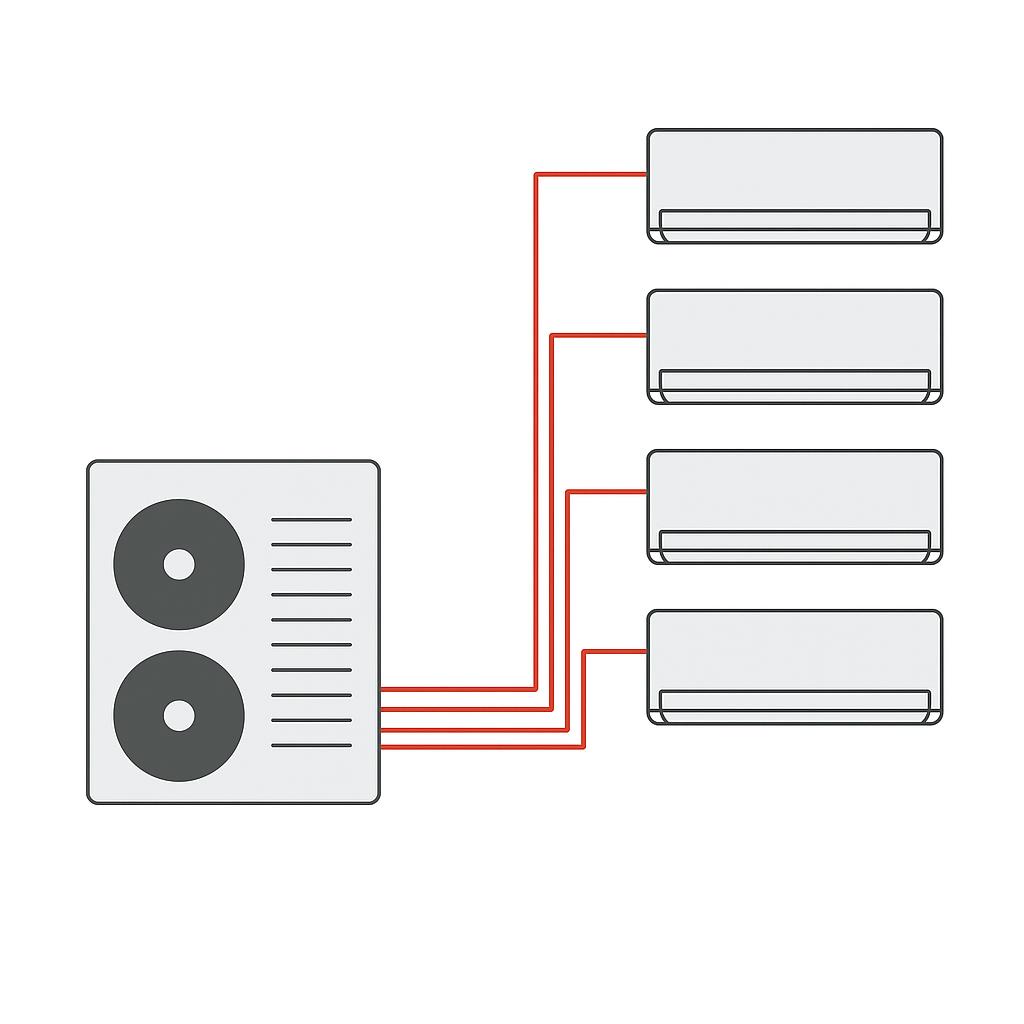
A multi-split, also called a multi-head, is one outdoor unit connected to between two and six indoor units, each controlled separately. The indoor units are usually wall-mounted, sometimes a small cassette, bulkhead or floor console, and different types can be mixed on one system. On most multi-splits every indoor unit has its own pair of refrigerant pipes and its own communication cable running back to its own port on the outdoor unit, and the valve that meters refrigerant to each room sits inside the outdoor unit, one per port.
How to Tell If You Have One
Multi-Split, Mini VRF or VRF?
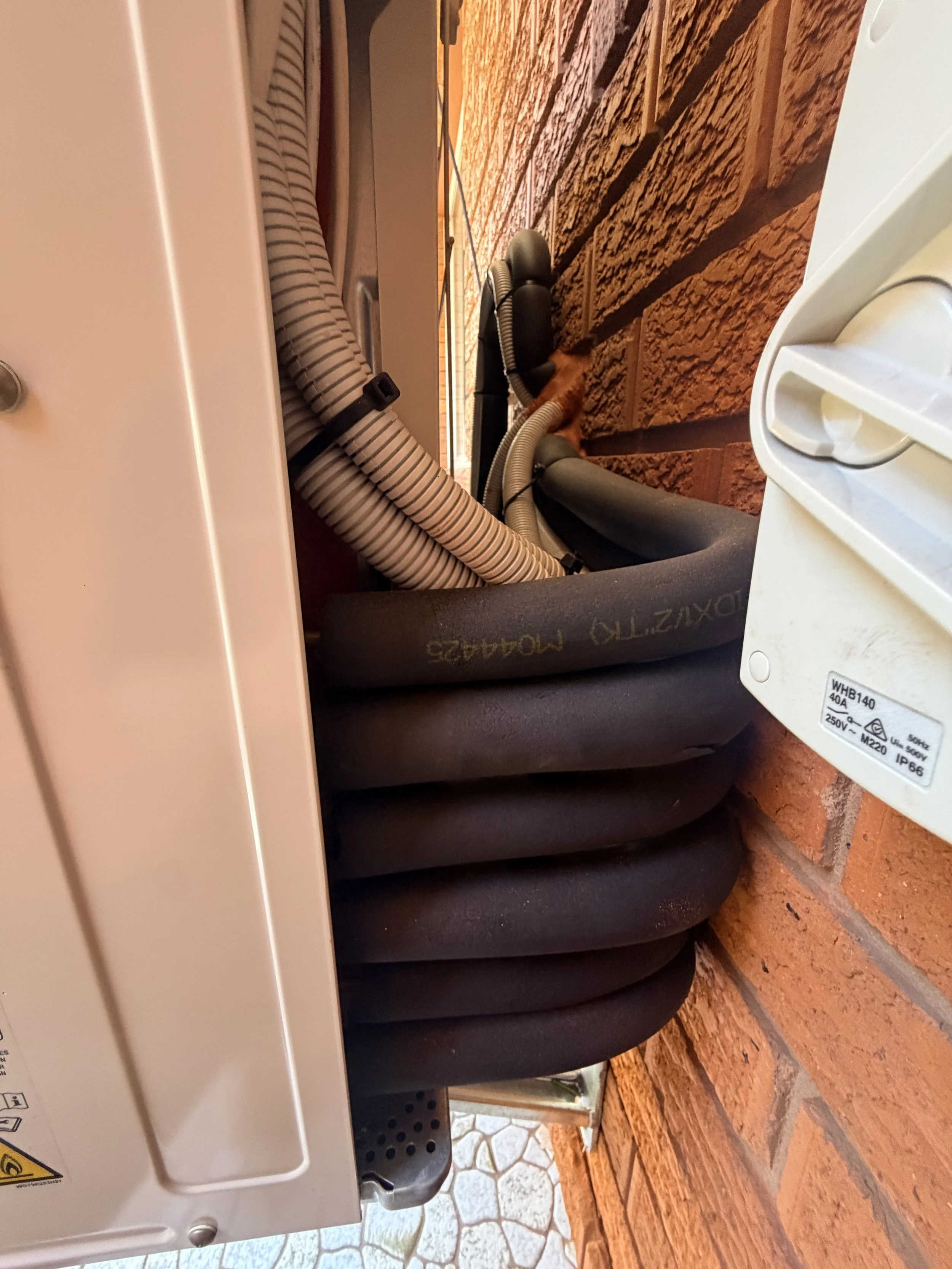
Count the pipes. A single split has one pair of insulated pipes arriving at the outdoor unit. A multi-split has a pair for every indoor unit, side by side at the service valves.
Not sure? Send a photo of the model plate with your enquiry and we will tell you what you have.
Once a system serves more than about six rooms, or runs one pipe out of the outdoor unit that branches in the ceiling instead of a pair per room, it is mini VRF or VRF. Daikin VRV, Mitsubishi Electric City Multi and Samsung DVM are the common names on those. They are serviced differently and have their own page: see VRV and VRF air conditioning.
Why Multi-Split Faults Are Different
The parts that fail are the same as on any split system: filters, coils, drains, fan motors, sensors, boards and refrigerant joints. What is different is how a fault shows itself, because several rooms share one outdoor unit and one set of controls. Knowing that saves a lot of wasted callouts.
If every indoor unit stops together, the cause is almost never five indoor units failing at the same moment. Look at the outdoor end first: its power supply, its circuit breaker, a fault on the outdoor board, fan or compressor. A communication error showing on every head at once, a U4 on a Daikin, points the same way, because each head has its own cable back to the outdoor unit and they rarely all fail together.
Turning the air con off at the isolator for five minutes is a reasonable first step, the same as on a single split. If the fault comes back, it is real, and the error code on the controller is the most useful thing you can send us.
Every Room Down at Once
Standby in One Room Is Usually Not a Fault
A multi-split can heat or cool, but not both at once. Every indoor unit has to run in the same mode, so if the bedroom is set to heat while the living room is already cooling, one of them waits in standby until the modes match. Some brands show a standby or mode conflict indication, some flash a lamp on the indoor unit, and some show nothing at all, so the room just stops heating or cooling.
Before you book a callout, set every indoor unit on the system to the same mode, or switch the others off. It is one of the most common multi-split calls we get that turns out not to be a fault.
One Room Not Cooling While the Others Work
When one room is wrong and the rest are fine, the cause is usually on that room's circuit: a blocked filter or coil in that indoor unit, a blocked drain that has shut it down, a failed indoor fan motor or sensor, a leak at that head's pipe joints, or the valve for that port. The last one catches people out. On most multi-splits the port valve is inside the outdoor unit, so a fault that only affects the bedroom can still be a repair at the outdoor unit.
Our initial diagnosis tests every indoor unit on the system rather than assuming the fault is where the symptom is.
Not Every Room at Full Power at Once
Multi-splits are designed on the basis that not every room needs full capacity at the same moment, so manufacturers let the indoor units add up to more than the outdoor unit can deliver. A Daikin 4MXM68 outdoor unit rated at 6.8 kW can have up to 11 kW of indoor units connected to it. With two rooms on, nobody notices. At 4pm on a 38°C day with every room on and the doors open, the outdoor unit is at its limit and the rooms share what it has. Rated capacity is measured at 35°C outside, so on a hotter afternoon it delivers less than that again.
That is the design, not a fault. What we check is whether the system is producing what it should for the conditions, because a multi-split that is short of refrigerant or has a clogged outdoor coil feels the same from inside the room.
More Joints, More Places to Leak
Each indoor unit is usually joined to its pipes with flare connections at both ends, so a four-room multi-split has sixteen flare joints where a single split has four, and usually longer pipe runs, often down the outside of the building. A slow leak at any one of them drains the refrigerant for every room, and the first sign is usually the whole system losing capacity on a hot day.
The outside pipework is worth a look too. Insulation that has perished in the sun lets the pipes sweat and quietly costs capacity, and we check it at every service.
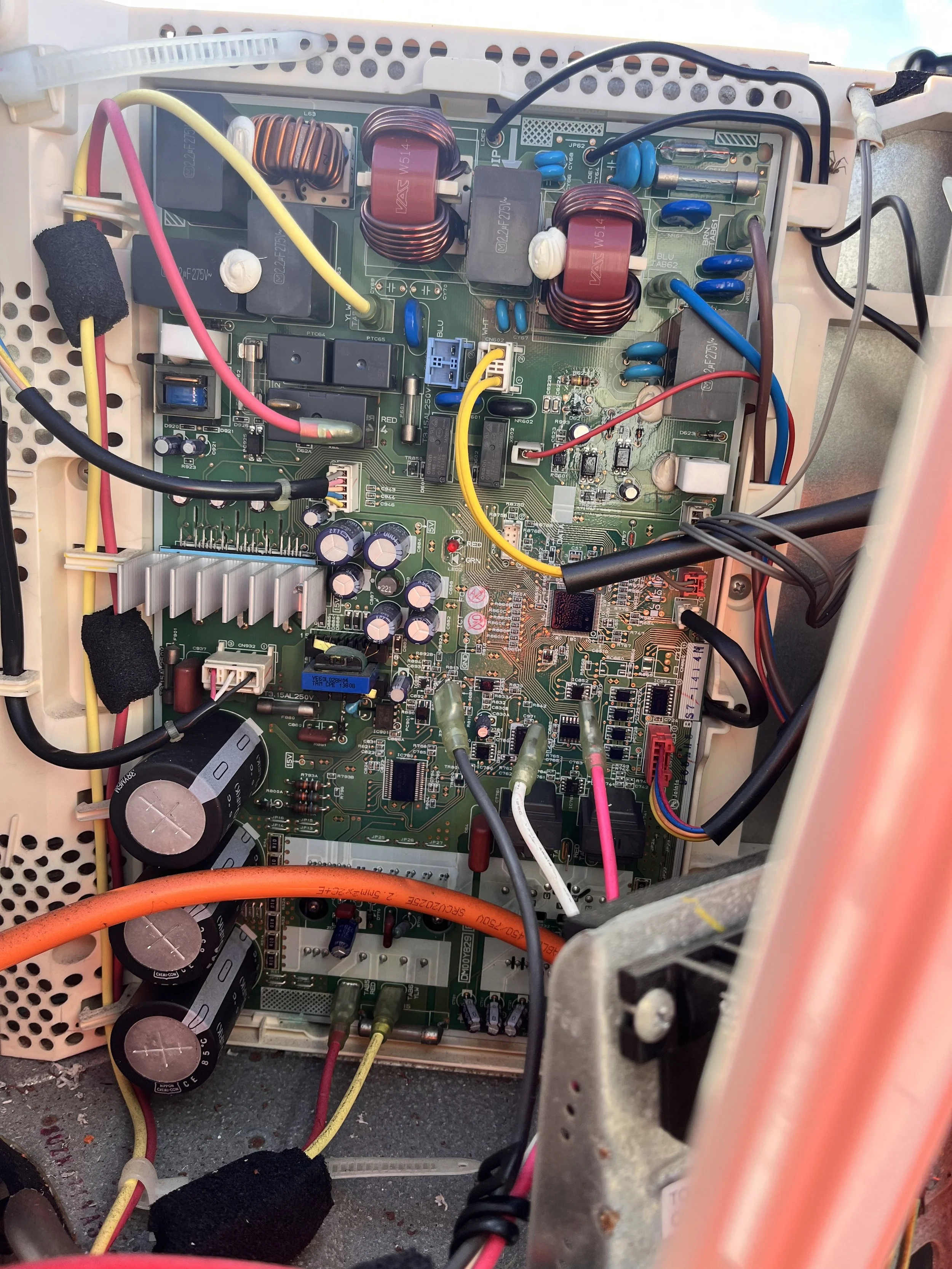
A multi-split repair starts with the error code and a test of every indoor unit, so we know whether the fault belongs to one room, one port, the communication between them or the outdoor unit. Then it is the same as any repair: we find what has failed, give you a fixed price to rectify it, and nothing starts until you approve it.
Parts for multi-split outdoor units, such as port valve coils, sensors, fan motors and boards, are specific to the model and usually ordered in, which takes a few days. Once they arrive you get a priority booking rather than going back to the queue.
If refrigerant is the problem, topping it up is not a repair. We find the leak, repair it, pressure test and evacuate, and put the charge back by weight. Multi-split outdoor units leave the factory charged for a set length of pipe, 40 metres on some models, and a system with longer runs should have had refrigerant added at installation, so the correct total has to be worked out rather than guessed.
If your multi-split is only a year or two old, check the manufacturer's warranty first. A fault on a new system is a warranty claim through the installer, and we will tell you so.
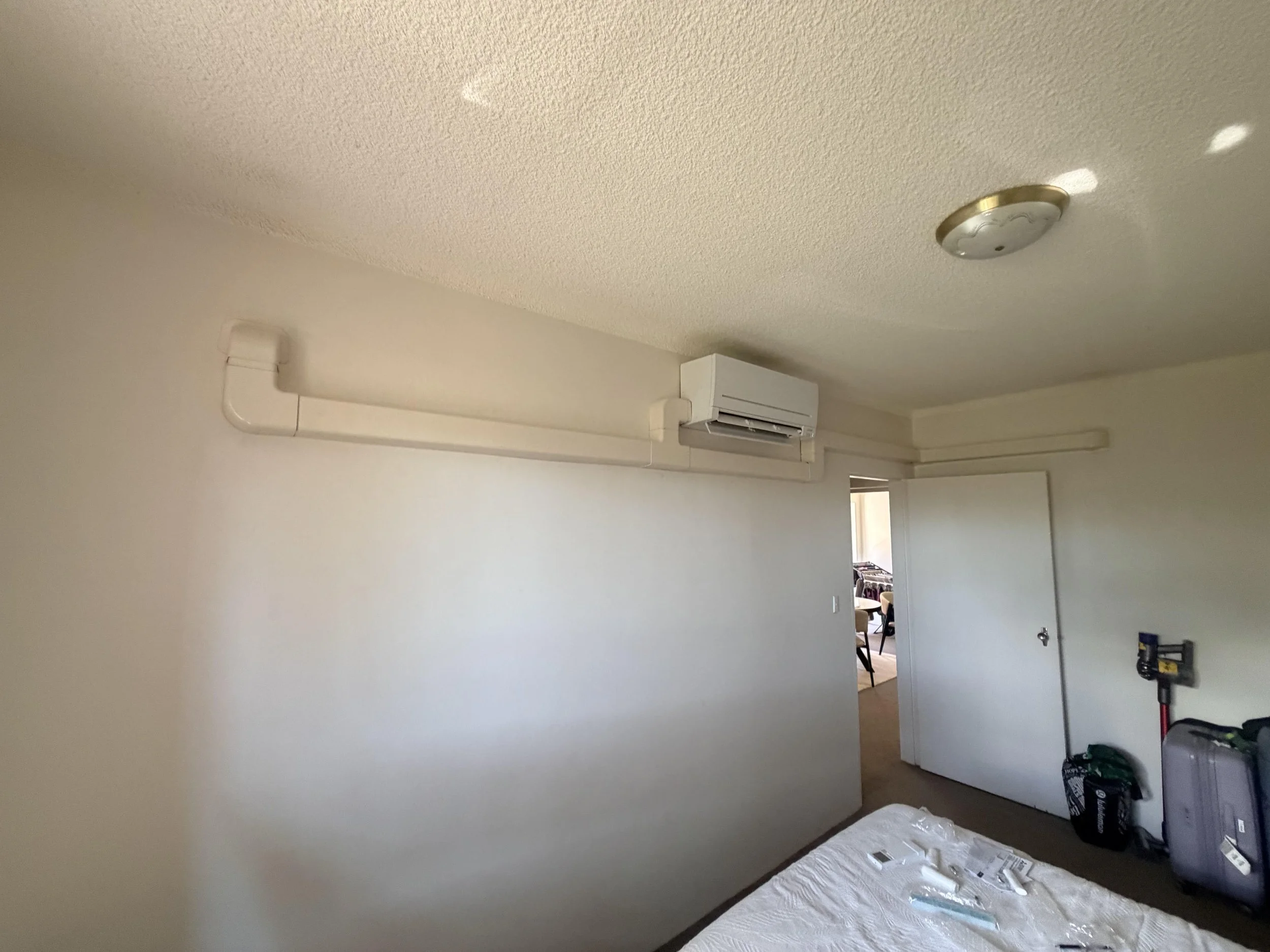
A multi-head system with four indoor units is four filters, four coils, four drain trays and four drains, plus the outdoor unit, so it takes longer than a single split and is quoted accordingly. Whichever service level you book, we:
Clean the filters and test the drain on every indoor unit, not just the one in the living room
Run each indoor unit and record the temperatures and airflow it achieves, room by room
Check the insulation on the outside pipework
Give you a written report covering every indoor unit and the outdoor unit
The deeper service levels add the cleaning, up to a strip-down deep clean of every indoor unit and the outdoor coil. All four levels are set out on our maintenance page.
Terraces, Apartments
and Houses Without Roof Space
Multi-splits are common across the Lower North Shore for one reason: a lot of the housing has nowhere to put ducted air conditioning. Terraces and cottages with low-pitched roofs, interwar and art deco blocks, and apartments with a single balcony all tend to end up with one outdoor unit and a head in each room.
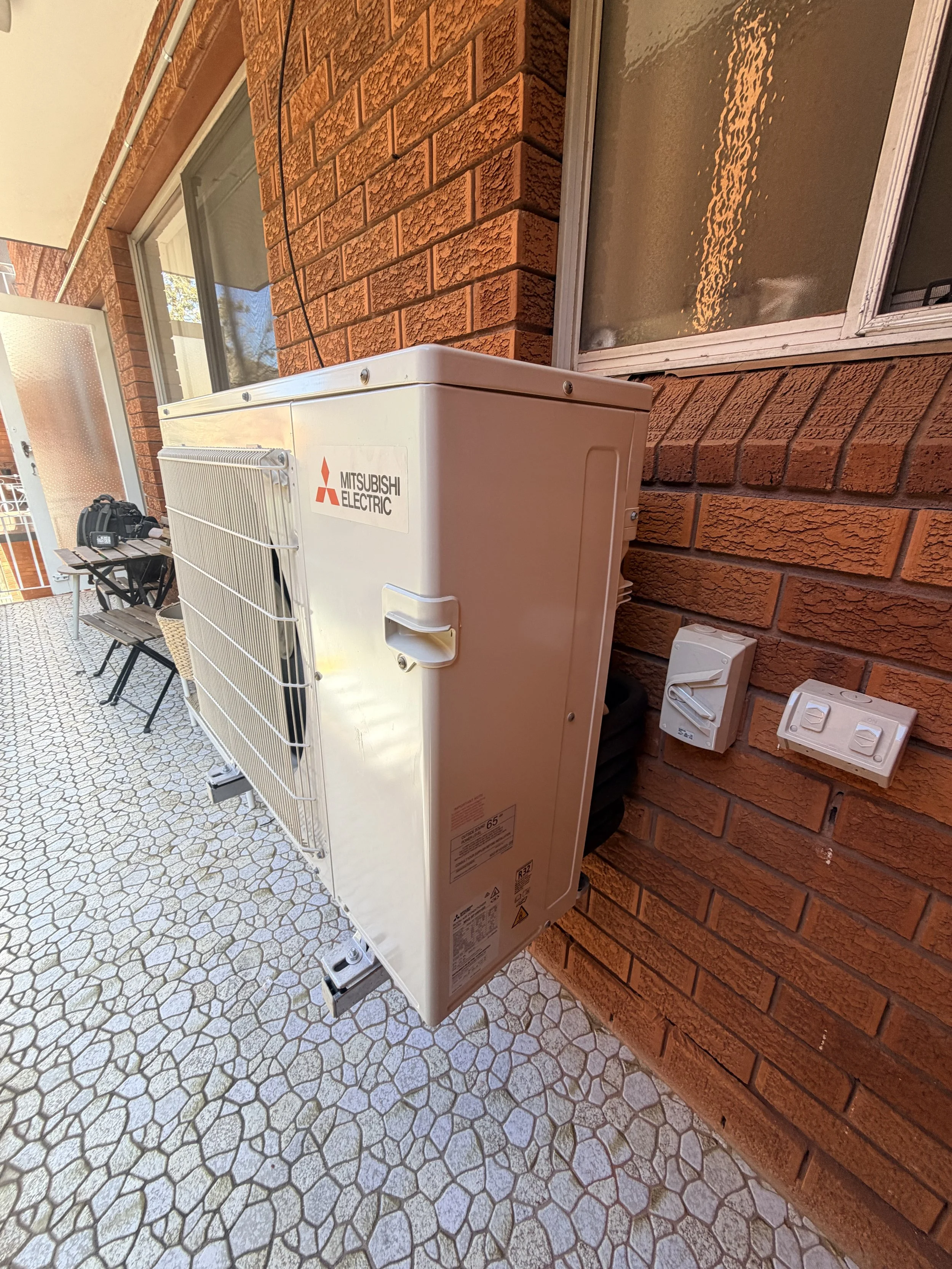
That shapes the work. The outdoor unit may be on a wall bracket, a balcony or a shop's rear roof, and the pipe runs are often long and on the outside of the building. In apartments, where the outdoor unit sits on common property, we tell you whether the work needs strata approval before it is quoted rather than after. Tell us at booking who manages access, whether that is a tenant, a managing agent or the building manager.
How We Price It
Servicing is quoted on enquiry. The price follows how many indoor units there are, what type they are and how easily the outdoor unit can be reached. Tell us the brand, the number of rooms and where the outdoor unit is, and include a photo of the model plate if you can.
Repairs start with a breakdown call. A breakdown call is $299 including GST, which covers attendance and the initial diagnosis of the fault. Once we know what has failed, you get a fixed price to rectify it. Where a fault needs further fault finding beyond that, a slow leak across several long pipe runs being the usual one, we tell you on site and quote it before we start.